Émile Zola and the Roman Noir
Did Émile Zola create the contemporary thriller ?
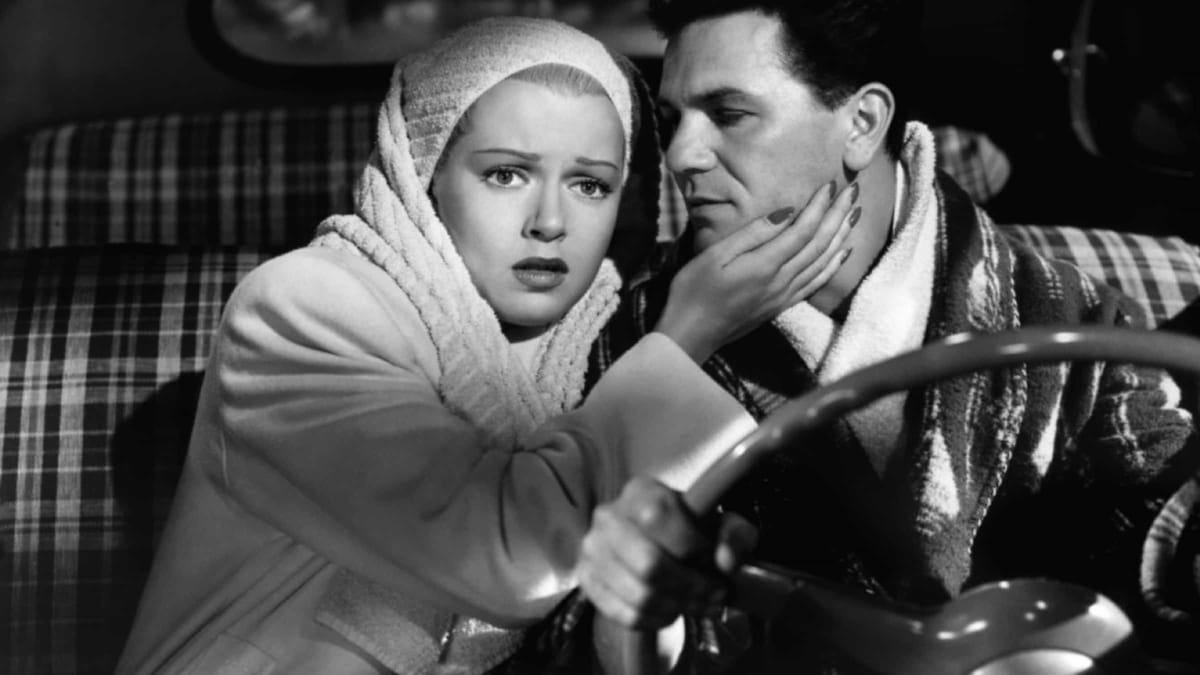
A few years ago I stumbled across a used copy of The Postman Always Rings Twice by James M. Cain (green Penguin Detective edition). This is a 1934 American thriller told from the perspective of Frank, a young drifter, who finds himself working in a Californian diner and becoming lovers with the owner's wife, Cora, who runs it. Their relationship is sexually charged, and after some time, they conspire to kill Cora’s husband, Nick—referred to as 'the Greek'. The novel has tense scenes, with the suspense of the attempts to kill Nick, the subsequent police investigations, and the changing dynamic between the lovers all set against a backdrop of heavy drinking, violence, and fatal physical attraction that drags the characters down. It's gripping, well paced and takes the reader to an unexpected outcome.
More recently, I was asked to read Émile Zola's Thérèse Raquin as part of my local Paris book club. My knowledge of Zola was of a French DH Lawrence with novels which commented on the social difficulties and injustices of everyday French life like Germinal or Au Bonheur des Dames. I was also aware of the author's part in the crusade for justice in the Dreyfus affair with his open letter J'Accuse which denounced the rampant antisemitism at the heart of the French establishment.
I started the 1867 novel expecting a socially engaged and slightly depressing portrait of the plight of the French working class. Instead, I found a highly tense psychological thriller which pulls the reader into a dynamic relationship of Thérèse, who is in an arranged marriage with Camille, a hypochondriac and self-centred man, and Camille's friend, Laurent. Thérèse and Laurent begin a passionate affair and decide that they need to murder Camille to live happily. Like the Cain classic, the novel focuses on the tense scenes where the reader doesn't know if the couple's crime will be revealed and also on the souring of the relationship between the lovers. The similarities between the two plots, written almost seven decades apart, is striking. A little research indeed indicated that Cain had indeed been inspired by Zola for his story.
This makes me wonder : do we need to rethink how much of the dark 'noir' fiction that we associate with the very American writers such as Raymond Chandler or Dashiell Hammett where sex, drink and violence is common currency, could be traced back to Zola ? In writing about the social difficulties of French society, Zola confronts his readers with the everyday mechanisms that his characters use and are subjected to: drink, violence and sex. In Zola's 1890 novel, La Bête Humaine, the author looks at the life of a train driver who covers the Paris - Le Havre line. The story is at once a vignette of French life but also a story of mental health, lust, jealousy and murder. A thriller hiding in an unusual place. Should we consider that the two genres are closer than we might think ?