Dietrich, Lola and me
Dietrich and her persona of Lola fascinated me as an adolescent. As an adult, they have my respect.
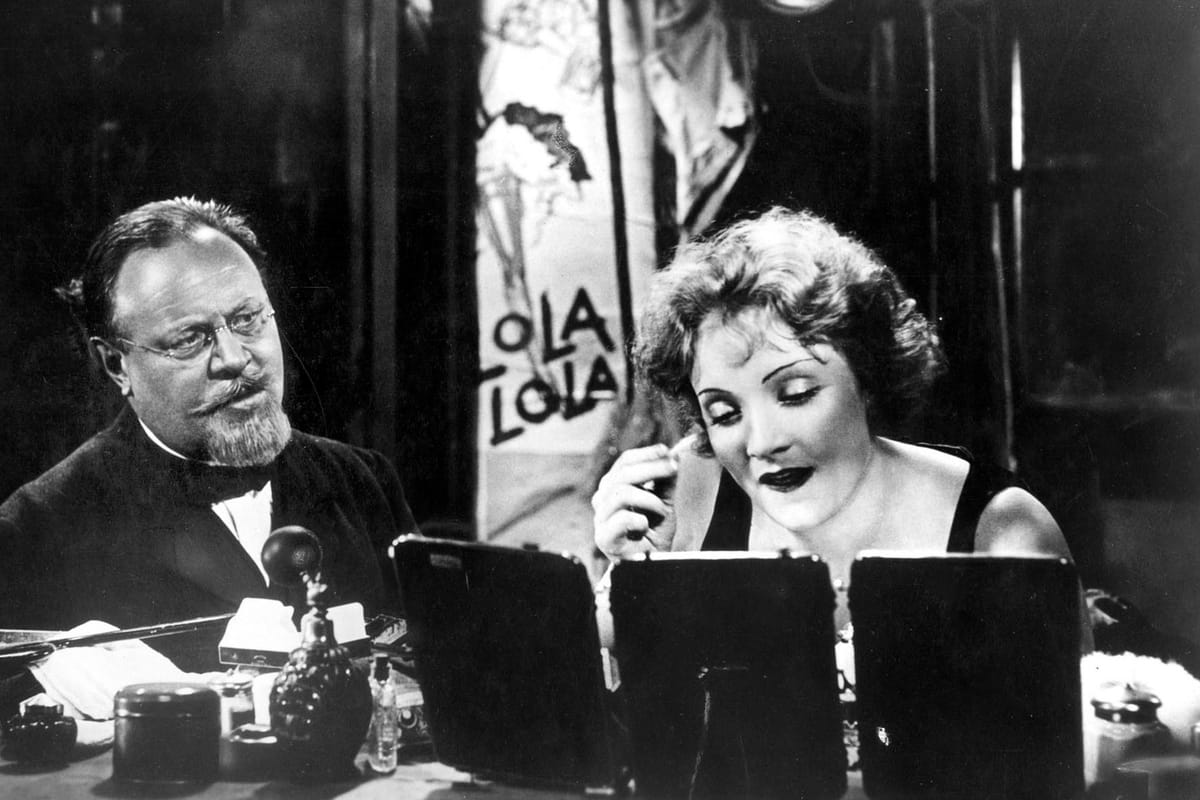
When I was in my early-teens, I discovered in my father's record collection, a series of Noel Coward musical performances from his cabaret tours during the 1950s. I devoured his songs, learnt the words and tried to copy his style. On one record, Coward, famously gay, introduces the music performance of Marlene Dietrich, recorded in Cafe de Paris in London. It is clear in the recording that the two have a deep affection for each other. They had been close friends before and during the war and I often wondered what brought them together.
On the record, Marlene's songs were often performed in a character. In 'Look me over closely', we imagine a conversation between ourselves and Dietrich as a lover. She warns us that she is a free woman, we have a place in her heart but ultimately she will always go her own way. Despite her beauty and elegance, the singer says that this is just part of her appearance: 'a woman likes to look her best before she pours the tea'. We have to consider who she really is and insists: 'I'm not the marrying kind'. The end of the song suggests that her lovers will always be heartbroken because they can't be together and issues a dark threat that staying together would be far more painful : 'I may be the marrying kind'.
In a different song, Lola, we meet another Dietrich character: a sexy cabaret singer who drives the boys wild with her music, calling her 'naughty Lola'. This song is translated from German and is featured in the much earlier 1930 film Der blaue Engel (The Blue Angel) directed by Josef von Sternberg which also stars Dietrich playing the role of Lola Lola, a lead cabaret singer. The story, adapted from a novel by Heinrich Mann, tells of how a high school professor, Immanuel Rath - a conservative man who is constantly mocked in the classroom - discovers that his pupils are secretly attending a travelling music show at night led by Lola Lola and her suggestive acts. Rath is scandalised and visits the show to denounce it but ends up falling under the charm of Lola Lola, with whom he falls in love. Despite advice from others and Lola herself, Rath asks Lola to marry him which Lola accepts, not appearing to take it seriously. This marks the start of a downward spiral of Rath losing his job, following the cabaret tour and finding himself being degraded, obliged to sell revealing photos of his wife to the public during the intervals to make ends meet and finally becoming a clown in an act where he is humiliated for laughs in front of the public. During this time, Lola's attention wanders for another richer man - the final indignity.
Despite the tragedy of the story, it's hard to feel anger towards Lola for Rath's fate. Lola is who she is and she never pretended otherwise. Lola is independent but also sincere. In her final song, Ich bin von Kopf bis Fuß auf Liebe eingestellt (Falling in Love Again), Lola wonders aloud:
Männer umschwirr'n mich
Wie Motten um das Licht
Und wenn sie verbrennen
Ja dafür kann ich nicht
Men swarm around me
Like moths to a flame
And if they get burned
Well, I'm not to blame
Lola is telling the men not to make her the enemy. This is their problem.
But does Lola reveal anything about Dietrich herself ? Dietrich started her stage and cinema career in the Germany in the 1920s, moving to the US during the commercial success of The Blue Angel and continuing her collaboration with von Sternberg with several Hollywood films. During her career, Dietrich had many lovers, and was an independent figure, developing and controlling her own image to the public.
But there is more to Dietrich the actress and singer, she was also woman of deep convictions. In the 1930s, she refused a lucrative proposition from the Nazi Party to make films - this at a time when Hitler's project had its admirers in the US and the UK. In 1937, she co- founded a fund to help Jewish refugees and donated to it her salary for that year. During the war, she renounced her German citizenship, helped to sell US war bonds and toured the theaters of battle to entertain the Allied troops, placing herself in uncomfortable and often dangerous conditions. She campaigned for causes throughout her life right up until her death in 1990.
But there is also Dietrich the artist who was bi-sexual, comfortable with it and never tried to hide who she was. As an actress she played with gender: sometimes donning men's work clothes (The Ship of Lost Men - 1929) or top hat and tails, (Morocco - 1930) and at other times as a burlesque performer (The Devil is a Woman - 1935) or as a glamorous femme fatale (Desire - 1935). This deliberate ambiguity was perhaps due to her unique link between the creativity of the Weimar Republic and then her Hollywood career but it made her unique in my mind.
I believe that Lola Lola from the song and the film is not really Dietrich. Dietrich was loyal, generous and had a strong moral compass. But it is fair to say that Dietrich, like Lola Lola, was a woman who did her own thing and did not allow herself be defined by anybody else. And for that we should all be grateful.